
The Supreme Court has directed the CBI and Manipur SITs to provide charge sheets in the 2023 Manipur ethnic violence cases to the victims and their families, ensuring legal aid and covering travel expenses for court appearances in Guwahati.
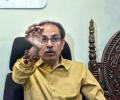
The Supreme Court has scheduled a hearing for January 21 on pleas challenging the Election Commission's decision to allot the 'bow and arrow' symbol to the Eknath Shinde faction of the Shiv Sena. The court will also hear arguments on a similar dispute concerning the Nationalist Congress Party (NCP) on January 22.

The Supreme Court has stated it will intervene if there is mass exclusion in the special intensive revision of electoral rolls in Bihar, emphasizing the Election Commission's role as a constitutional authority.

The Supreme Court of India has directed all high courts to establish timelines for trial courts to expedite the conclusion of acid attack cases across the country, emphasising the need for a more proactive approach and adequate compensation for victims.

The SC questioned the language used by Allahbadia during the show, saying society has some values.

The Supreme Court expressed displeasure over the Allahabad High Court's orders regarding the Banke Bihari Temple in Vrindavan, questioning the use of intemperate language against the Uttar Pradesh government and staying further proceedings.

The Supreme Court on Tuesday dismissed an appeal of Reliance Industries Limited and two of its officials against a decision of the Securities Appellate Tribunal, which had upheld a penalty imposed by markets regulator Sebi for not making prompt clarification to stock exchange about the Jio-Facebook deal.

The Supreme Court has taken suo motu cognisance of the controversy surrounding the definition of Aravalli hills and is scheduled to hear the matter. The court had previously accepted a uniform definition and banned fresh mining leases in the area.
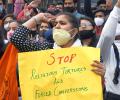
The Supreme Court has sought responses from the Centre and 12 states on a PIL challenging the validity of their anti-conversion laws. The National Council of Churches in India (NCCI) filed the PIL, seeking a stay on the operation of these laws.

A bench of Justices Surya Kant and N Kotiswar Singh took note of Allahbadia's submission that the podcast was his only source of livelihood and around 280 people employed by him were dependent on the show.
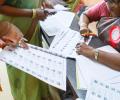
The Election Commission of India clarified that claims, objections, and corrections to the draft electoral roll in Bihar's special intensive revision exercise can be filed beyond September 1, but will be considered after the roll is finalized. The Supreme Court directed assistance for voters and parties in filing claims.

The Delhi High Court agreed to hear a plea regarding mass flight cancellations by IndiGo, while the Supreme Court acknowledged the chaos as a 'serious matter'. IndiGo has cancelled 500 flights, leaving many passengers stranded.

The Supreme Court has announced that a nine-judge bench will begin final hearings on petitions related to discrimination against women in religions, including the Sabarimala Temple case, starting April 7.
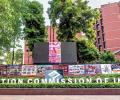
The Election Commission (EC) defended its power to revise electoral rolls and ensure no foreigners are registered as voters before the Supreme Court. The EC argued it has a constitutional duty to maintain the purity of electoral rolls and exclude those not eligible to vote.

The Supreme Court has taken serious note of the digital arrest of a senior citizen couple in Haryana based on forged orders, highlighting the rising number of such cases and seeking responses from the Centre and CBI.
The Supreme Court has agreed to hear a plea challenging the Election Commission's decision to conduct Special Intensive Revision (SIR) of electoral rolls in Tamil Nadu, Kerala and West Bengal. The court is also addressing concerns about disenfranchisement and citizenship issues related to the revision process.

The Supreme Court has directed the Election Commission to address typographical errors and other mistakes in the final Bihar electoral roll. The court will hear further arguments on November 4.

It said that when a retiree, who withdraws amounts in the range of Rs 10,000 or Rs 20,000, suddenly withdraws huge amounts, then the bank should issue an alert.
The Supreme Court has expressed serious concerns about the rise in digital fraud, particularly digital arrest scams, and has directed the central government to develop a standard operating procedure to combat these crimes.
The observations came while upholding the constitutional validity of Section 6A of the Citizenship Act which grants Indian citizenship to immigrants from Bangladesh who entered Assam on or after January 1, 1966 but before March 25, 1971.
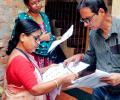
The Supreme Court expressed concern over threats to election officials in West Bengal and other states, urging the Election Commission to take action. The court also addressed the lack of cooperation from state governments in electoral roll revisions.
The Supreme Court of India has cautioned against the dangers of unregulated social media, emphasizing that freedom of speech cannot be exercised at the expense of others' dignity and integrity. The court was addressing a plea related to a recent incident where a shoe was thrown at the Chief Justice of India.

Surendra Koli, accused in the infamous Nithari serial killings, has been released from the Luksar district jail in Greater Noida, a day after the Supreme Court acquitted him in the last pending case linked to the 2006 serial murders that had shocked the nation, officials said on Thursday.
The Supreme Court has expressed serious concern over the rising cases of digital arrest cybercrime in India, where fraudsters extort money from victims by posing as law enforcement officials. The court has vowed to deal with such cases with an iron hand and has sought reports from the Ministry of Home Affairs and the CBI.
The Supreme Court reprimanded an Israeli businessman residing in India, questioning his presence in Goa while seeking to halt the repatriation of his two daughters and their Russian mother, who were rescued from a Karnataka forest.

The Supreme Court of India has questioned the legal status of Rohingya refugees living in the country, raising concerns about providing resources to illegal entrants while Indian citizens face poverty.

The Supreme Court has stayed a recent University Grants Commission (UGC) regulation following petitions arguing that the Commission's definition of caste-based discrimination was too narrow, excluding certain categories from institutional protection.
The Supreme Court of India resumed hearing petitions challenging the Special Intensive Revision of electoral rolls in Bihar, addressing the use of Aadhaar and concerns about voter deletions.
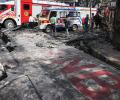
The Supreme Court has raised concerns about the preliminary report on the Air India crash and has asked for a more independent and thorough investigation.

The court is hearing appeals against a CCI order imposing a penalty on Meta and WhatsApp.

The Supreme Court of India has ruled that individuals affiliated with political parties are not barred from contesting elections for bar bodies. The court dismissed a PIL seeking directions to prevent such candidates, arguing that a diverse range of ideologies is essential in a democracy and that there is no law prohibiting politically active individuals from participating in bar body elections.
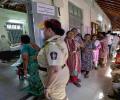
The Supreme Court has addressed the issue of reservation quotas in Maharashtra local body elections, stating that the final results of elections in 57 local bodies, where the 50% quota ceiling has been breached, will depend on its judgment in the case.

Describing the act as the 'grossest kind of indiscipline', the Supreme Court on Tuesday dismissed a former Christian officer's plea challenging his termination from the armed forces, after he allegedly refused to participate in regimental religious activities at the sanctum sanctorum of a temple at a place of his posting.

The Supreme Court declined to initiate contempt action against a lawyer who hurled a shoe at the Chief Justice of India, citing the CJI's own refusal to proceed against him. The court is considering guidelines to prevent such incidents.
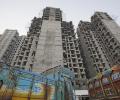
The Supreme Court of India has upheld an order directing NBCC to complete 16 delayed housing projects of Supertech Limited, providing relief to thousands of homebuyers who have been waiting for nearly two decades.
The Supreme Court of India has upheld an order directing NBCC to complete 16 delayed housing projects of Supertech Limited, providing relief to thousands of homebuyers who have been waiting for nearly two decades.
The Supreme Court has restrained lower courts from releasing the accused in a digital arrest fraud case where a 72-year-old lawyer was duped of Rs 3.29 crore. The court expressed concern over the growing cybercrime and the targeting of elderly citizens.

The Supreme Court has sought a response from the Election Commission on a plea by Trinamool Congress MPs alleging irregularities in the revision of electoral rolls in West Bengal.

The Supreme Court has adjourned pleas challenging the appointments of the chief election commissioner (CEC) and election commissioners (ECs) under the 2023 law. The court indicated the matter would be listed after the Holi festival break due to a paucity of time. Petitioners, including the NGO Association for Democratic Reforms, argued for an urgent hearing, emphasizing the importance of the issue and the potential impact on democratic processes. The appointment of the new CEC and ECs under the 2023 law, which excludes the Chief Justice of India from the selection panel, has been a point of contention, with petitioners alleging it undermines the independence of the election commission.
The Supreme Court has granted protection from arrest to The Wire's founding editor Siddharth Varadarajan and Consulting Editor Karan Thapar in connection with an FIR registered by Assam Police over a news article.
